Showing posts with label new_zealand. Show all posts

Tuesday, 30 August 2022

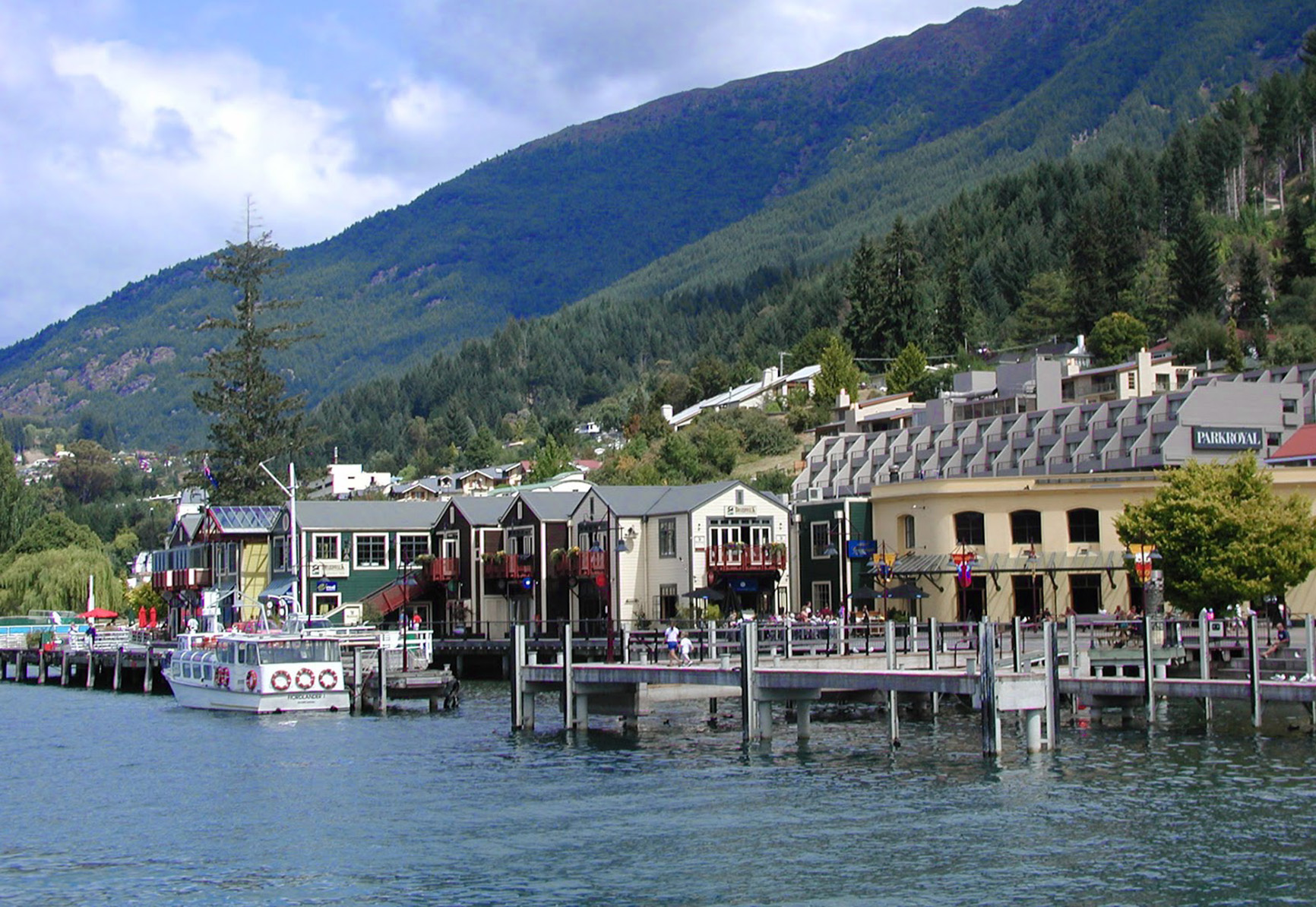
TRAVEL TUESDAY 354 - QUEENSTOWN, NEW ZEALAND

“New Zealand was one of the most beautiful countries to drive through for the scenery and the vast scale of the place.” -  Louise Redknapp

Welcome to the Travel Tuesday meme! Join me every Tuesday and showcase your creativity in photography, painting and drawing, music, poetry, creative writing or a plain old natter about Travel.
There is only one simple rule: Link your own creative work about some aspect of travel and share it with the rest of us. Please use this meme for your creative endeavours only.
Do not use this meme to advertise your products or services as any links or comments by advertisers will be removed immediately.
Queenstown (Māori: Tāhuna) is a resort town in Otago in the south-west of New Zealand's South Island. It is built around an inlet called Queenstown Bay on Lake Wakatipu, a long thin Z-shaped lake formed by glacial processes, and has spectacular views of nearby mountains such as The Remarkables, Cecil Peak, Walter Peak and just above the town; Ben Lomond and Queenstown Hill. 

Queenstown has an urban population of 15,500 (June 2021), making it the 29th largest urban area in New Zealand, and the third largest urban area in Otago, behind Dunedin and Oamaru. The Queenstown-Lakes District has a land area of 8,704.97 square kilometres not counting its inland lakes (Lake Hāwea, Lake Wakatipu, and Lake Wanaka). The region has an estimated resident population of 48,300 (June 2021 estimate).

Its neighbouring towns include Arrowtown, Glenorchy, Kingston, Wanaka, Alexandra, and Cromwell. The nearest cities are Dunedin and Invercargill. Queenstown is now known for its commerce-oriented tourism, especially adventure and ski tourism. It is popular with New Zealand, neighbouring Australian and other international travellers alike.

This post is also part of the Ruby Tuesday meme

You are invited to the Inlinkz link party!

Click here to enter

Tuesday, 12 October 2021

TRAVEL TUESDAY 309 - COROMANDEL NZ

“On earth there is no heaven, but there are pieces of it.” - Jules Renard

Welcome to the Travel Tuesday meme! Join me every Tuesday and showcase your creativity in photography, painting and drawing, music, poetry, creative writing or a plain old natter about Travel.
There is only one simple rule: Link your own creative work about some aspect of travel and share it with the rest of us. Please use this meme for your creative endeavours only.
Do not use this meme to advertise your products or services as any links or comments by advertisers shall be removed immediately.
The Coromandel Peninsula on the North Island of New Zealand extends 85 kilometres north from the western end of the Bay of Plenty, forming a natural barrier to protect the Hauraki Gulf and the Firth of Thames in the west from the Pacific Ocean to the east. At its broadest point, it is 40 kilometres wide.
Almost the entire population lies on the narrow strips along the Hauraki Gulf and Bay of Plenty coasts. In fine weather the peninsula is clearly visible from Auckland, the country's biggest city, which lies on the far shore of the Hauraki Gulf, 55 kilometres to the west. The peninsula is part of the local government areas of Thames-Coromandel District and the Waikato Region.
The pristine coastline along the Coromandel Peninsula was used to great effect in the 2008 film “The Chronicles of Narnia – Prince Caspian”, and made this location widely known internationally. Notwithstanding this, the area has always attracted many tourists because of its natural beauty.

This post is part of the Our World Tuesday meme,
and also part of the Wordless Wednesday meme.

You are invited to the Inlinkz link party!

Click here to enter

Tuesday, 6 October 2020

TRAVEL TUESDAY 256 - CATHEDRAL COVE, NZ

“The true paradises are the paradises that we have lost.” ― Marcel Proust

 
Welcome to the Travel Tuesday meme! Join me every Tuesday and showcase your creativity in photography, painting and drawing, music, poetry, creative writing or a plain old natter about Travel.
There is only one simple rule: Link your own creative work about some aspect of travel and share it with the rest of us. Please use this meme for your creative endeavours only.
Do not use this meme to advertise your products or services as any links or comments by advertisers shall be removed immediately.
 
The Coromandel Peninsula on the North Island of New Zealand extends 85 kilometres north from the western end of the Bay of Plenty, forming a natural barrier to protect the Hauraki Gulf and the Firth of Thames in the west from the Pacific Ocean to the east. At its broadest point, it is 40 kilometres wide. Almost the entire population lies on the narrow strips along the Hauraki Gulf and Bay of Plenty coasts. 
 
In fine weather the peninsula is clearly visible from Auckland, the country's biggest city, which lies on the far shore of the Hauraki Gulf, 55 kilometres to the west. The peninsula is part of the local government areas of Thames-Coromandel District and the Waikato Region. Cathedral Cove, shown here, named for its cathedral-like arch through the limestone cliff, is a popular destination, only accessible by boat or on foot. 
 
If you have seen the movie “Chronicles of Narnia: Prince Caspian”, the beautiful paradisiacal beaches seen at the beginning of the film, where the children are at Cair Paravel, were shot in Cathedral Cove. It truly is a fairy-tale setting!

You are invited to the Inlinkz link party!

Click here to enter

Tuesday, 11 August 2020

TRAVEL TUESDAY 248 - AORAKI, NEW ZEALAND

 
“My dream home would be a fishing lodge in New Zealand.” - John Rocha 

Welcome to the Travel Tuesday meme! Join me every Tuesday and showcase your creativity in photography, painting and drawing, music, poetry, creative writing or a plain old natter about Travel.

There is only one simple rule: Link your own creative work about some aspect of travel and share it with the rest of us. Please use this meme for your creative endeavours only.

Do not use this meme to advertise your products or services as any links or comments by advertisers shall be removed immediately. 
Aoraki/Mount Cook National Park is in the South Island of New Zealand, near the town of Twizel. Aoraki / Mount Cook, New Zealand's highest mountain, and Aoraki/Mount Cook Village lie within the park. The area was gazetted as a national park in October 1953 and consists of reserves that were established as early as 1887 to protect the area's significant vegetation and landscape.

Even though most of the park is alpine terrain, it is easily accessible. The only road access into Aoraki/Mount Cook National Park is via State Highway 80, which starts near Twizel, at 65 kilometres distance the closest town to the park, and leads directly to Mount Cook Village, where the road ends. The village is situated within the park, however, it consists only of a hotel and motels, as well as housing and amenities for the staff of the hotel and motels and other support personnel.

The park stretches for about 60 kilometres along the southwest-northeast direction of the Southern Alps, covering 722 km2 on the southeastern side of the main spine of the Alps. The valleys of the Tasman, Hooker, and Godley glaciers are the only entrances into this alpine territory that lie below 1,000 m. Glaciers cover 40% of the park area, notably the Tasman Glacier in the Tasman Valley east of Aoraki / Mount Cook. Eight of the twelve largest glaciers in New Zealand lie within Aoraki/Mount Cook National Park, all of which terminate at proglacial lakes formed in recent decades due to a sustained period of shrinking.

This post is part of the Our World Tuesday meme,
and also part of the Wordless Wednesday meme.

You are invited to the Inlinkz link party!
Click here to enter

Tuesday, 14 January 2020

TRAVEL TUESDAY 218 - QUEENSTOWN, NEW ZEALAND

“We all have to remember that New Zealand is built on the kind of people who are rebels and renegades, people doing it their own way, fighting for freedom, and braving the elements. I think it’s cool to celebrate that.” - Taika Waititi 

Welcome to the Travel Tuesday meme! Join me every Tuesday and showcase your creativity in photography, painting and drawing, music, poetry, creative writing or a plain old natter about Travel. 

There is only one simple rule: Link your own creative work about some aspect of travel and share it with the rest of us. Please use this meme for your creative endeavours only. 

Do not use this meme to advertise your products or services as any links or comments by advertisers will be removed immediately.
Queenstown (Māori: Tāhuna) is a resort town in Otago in the south-west of New Zealand’s South Island. It is built around an inlet called Queenstown Bay on Lake Wakatipu, a long thin Z-shaped lake formed by glacial processes, and has spectacular views of nearby mountains such as The Remarkables, Cecil Peak, Walter Peak and just above the town; Ben Lomond and Queenstown Hill.

Queenstown has an urban population of 13,150 (June 2015 estimate), making it the 29th largest urban area in New Zealand, and the third largest urban area in Otago, behind Dunedin and Oamaru. The Queenstown-Lakes District has a land area of 8,705 square kilometres not counting its inland lakes (Lake Hāwea, Lake Wakatipu, and Lake Wanaka). The region has an estimated resident population of 32,400 (June 2015 estimate). Its neighbouring towns include Arrowtown, Glenorchy, Kingston, Wanaka, Alexandra, and Cromwell. The nearest cities are Dunedin and Invercargill.

Queenstown is now known for its commerce-oriented tourism, especially adventure and ski tourism. It is popular with New Zealand, neighbouring Australian and other international travellers alike.

This post is part of the  Our World Tuesday meme,
and also part of the Wordless Wednesday meme.

You are invited to the Inlinkz link party!
Click here to enter

Tuesday, 2 July 2019

TRAVEL TUESDAY #190 - NEW ZEALAND STH ISLAND

“New Zealand was one of the most beautiful countries to drive through for the scenery and the vast scale of the place.” - Louise Redknapp

Welcome to the Travel Tuesday meme! Join me every Tuesday and showcase your creativity in photography, painting and drawing, music, poetry, creative writing or a plain old natter about Travel.

There is only one simple rule: Link your own creative work about some aspect of travel and share it with the rest of us. Please use this meme for your creative endeavours only.

Do not use this meme to advertise your products or services as any links or comments by advertisers will be removed immediately. 
The South Island or Te Waipounamu is the larger of the two major islands of New Zealand, the other being the smaller but more populous North Island. It is bordered to the north by Cook Strait, to the west by the Tasman Sea, and to the south and east by the Pacific Ocean. The South Island covers 150,437 square kilometres and enjoys a temperate climate. As it has a 32% larger landmass than the North Island, it is sometimes referred to as the “mainland” of New Zealand, especially by South Island residents; however, only 23% of New Zealand’s 4.6 million inhabitants live in the South Island.

In the early stages of European (Pākehā) settlement of the country, the South Island had the majority of the European population and wealth due to the 1860s gold rushes. The North Island population overtook the South in the early 20th century, with 56% of the population living in the North in 1911, and the drift north of people and businesses continued throughout the century.

The South Island is divided along its length by the Southern Alps, the highest peak of which is Aoraki/Mount Cook at 3754 metres, with the high Kaikoura Ranges to the northeast. There are eighteen peaks of more than 3000 metres in the South Island. The east side of the island is home to the Canterbury Plains while the West Coast is famous for its rough coastlines such as Fiordland, very high proportion of native bush, and Fox and Franz Josef Glaciers. The dramatic landscape of the South Island has made it a popular location for the production of several films, including “The Lord of the Rings” trilogy and “The Chronicles of Narnia: The Lion, the Witch and the Wardrobe.”

This post is part of the Our World Tuesday meme,
and also part of the Wordless Wednesday meme.

You are invited to the Inlinkz link party!

Click here to enter

Tuesday, 26 March 2019

TRAVEL TUESDAY #176 - AUCKLAND, NZ

“The highest purpose of education is to unlearn what we once took for granted, to replace certainty with subtlety, prejudice with compassion, and destiny with possibility.” ― Neel Burton 

Welcome to the Travel Tuesday meme! Join me every Tuesday and showcase your creativity in photography, painting and drawing, music, poetry, creative writing or a plain old natter about Travel.

There is only one simple rule: Link your own creative work about some aspect of travel and share it with the rest of us. Please use this meme for your creative endeavours only.

Do not use this meme to advertise your products or services as any links or comments by advertisers will be removed immediately.
Auckland is a city in the North Island of New Zealand. Auckland is the largest urban area in the country, with an urban population of around 1,628,900 (June 2018). It is located in the Auckland Region—the area governed by Auckland Council—which includes outlying rural areas and the islands of the Hauraki Gulf, resulting in a total population of 1,695,900. A diverse and multicultural city, Auckland is home to the largest Polynesian population in the world. The Māori-language name for Auckland is Tāmaki or Tāmaki-makau-rau, meaning “Tāmaki with a hundred lovers”, in reference to the desirability of its fertile land at the hub of waterways in all directions

Auckland is classified as a Beta+ World City because of its importance in commerce, the arts, and education. The University of Auckland, established in 1883, is the largest university in New Zealand. Landmarks such as the Auckland Art Gallery Toi o Tāmaki, the Harbour Bridge, the Sky Tower, and many museums, parks, restaurants, and theatres are among the city’s significant tourist attractions. Auckland Airport handles around one million international passengers a month. Despite being one of the most expensive cities in the world, Auckland is ranked third on the 2016 Mercer Quality of Living Survey, making it one of the most liveable cities.

Whenever we visit Auckland we go to Albert Park and have a wander through the pathways and lawns, making our way up to the University of Auckland. This is New Zealand’s pre-eminent research-led University. Established in 1883, it has grown into an international centre of learning and academic excellence and is New Zealand’s largest university. Its mission is to be an internationally recognised, research-led university, known for the excellence of its teaching, research, and service to its local, national and international communities. It aims to be a vibrant and intellectually challenging place of learning, nurturing a community of scholars who share a passion for discovery, the advance of knowledge and human progress.

The signature building of the University is the Clock Tower, which is a wonderful Victorian confection in white, reminding one of a wedding cake bedecked in icing sugar filigree decorations. The campus is quite extensive and is an agglomeration of modern and Victorian buildings, beautiful parks, gardens, roads and pathways.

This post is part of the Our World Tuesday meme,
and also part of the Wordless Wednesday meme.

You are invited to the Inlinkz link party!

Click here to enter

Saturday, 20 January 2018

IF MUSIC BE THE FOOD OF LOVE...

Then dance must be its sweet dessert... 

“The silver swan, who, living had no note, When death approached unlocked her silent throat.” - Orlando Gibbons 

Pavlova is a meringue-based dessert named after the Russian ballerina Anna Pavlova (February 12 1881 – January 23, 1931). It is a meringue dessert with a crisp crust and soft, light inside, usually topped with fruit and whipped cream. The dessert is believed to have been created in honour of the dancer either during or after one of her tours to Australia and New Zealand in the 1920s. The nationality of its creator has been a source of argument between the two nations for many years.

In 2008, Helen Leach published “The Pavlova Story: A Slice of New Zealand’s Culinary History”, in which she argued that the earliest known recipe was published in New Zealand. Later research by Andrew Wood and Annabelle Utrecht suggested the dessert originated in the United States and was based on an earlier German dish. The dessert is a popular dish and an important part of the national cuisine of both Australia and New Zealand, and with its simple recipe, is frequently served during celebratory and holiday meals.

It is a dessert most identified with the summer time and popularly eaten during that period including at Christmas time, however it is also eaten all year round in many Australian and New Zealand homes.

Here is a recipe for Pavlova: 

Pavlova
Ingredients

Whites of 6 medium, very fresh eggs, separated
300 g caster Sugar
2 generous teaspoons cornflour
1 and 1/2 teaspoons white vinegar
1/2 teaspoon vanilla extract
300ml thickened cream
2 tablespoons CSR Pure Icing Sugar, sifted
Pulp of 3 passionfruit (if fresh not available use canned pulp 170g)
1 teaspoon gelatin powder
2 tablespoons boiling water
Other seasonal fruits (strawberries, kiwi fruit, raspberries, blackberries) or glace fruit or preserved fruit (peaches) if fresh fruit is unavailable. Passionfruit is a must!

Method
Preheat oven to 120°C. Line an oven tray with foil. Brush with melted butter and dust with cornflour, shaking off excess. Mark a 24cm-diameter circle on foil.
Use an electric mixer to whisk egg whites in a clean dry bowl until soft peaks form. Gradually add sugar, 1 tablespoon at a time, beating well after each addition, until meringue is thick and glossy and sugar dissolved. Rub a little meringue between fingers. If still "gritty" with sugar, continue to whisk until sugar dissolves. Add cornflour, vinegar and vanilla and whisk until just combined.
Spoon meringue onto the foil, using the marked circle as a guide. Smooth sides and top of pavlova. Use a small spatula to forms little peaks around edge of pavlova. Bake in oven for 11/2 hours or until pavlova is dry to the touch. Turn off oven. Leave pavlova in oven with the door ajar to cool completely. When completely cold, transfer to serving plate or store in an airtight container until required.
Boil the water in a cup in a microwave and dissolve the gelatin in it, adding the passionfruit pulp. Let this cool until it is just beginning to set.
Meanwhile, use an electric mixer to whisk the cream and icing sugar in a medium bowl until firm peaks form. Spoon cream onto the top of pavlova. Pour the passionfruit jelly mixture on top and decorate pavlova with fruit.

And here is Anna Pavlova dancing the Dying Swan to music by Camille Saint Saëns. 

Tuesday, 1 August 2017

TRAVEL TUESDAY #90 - MILFORD SOUND, NZ

“Keep close to Nature’s heart... and break clear away, once in awhile, and climb a mountain or spend a week in the woods. Wash your spirit clean.” - John Muir 

Welcome to the Travel Tuesday meme! Join me every Tuesday and showcase your creativity in photography, painting and drawing, music, poetry, creative writing or a plain old natter about Travel.

There is only one simple rule: Link your own creative work about some aspect of travel and share it with the rest of us. Please use this meme for your creative endeavours only.

Do not use this meme to advertise your products or services as any links or comments by advertisers will be removed immediately.
Milford Sound (Piopiotahi in Māori) is a fjord in the south west of New Zealand’s South Island, within Fiordland National Park, Piopiotahi (Milford Sound) Marine Reserve, and the Te Wahipounamu World Heritage site. It has been judged the world’s top travel destination in an international survey (the 2008 Travellers’ Choice Destinations Awards by Trip Advisor) and is acclaimed as New Zealand’s most famous tourist destination. Rudyard Kipling had previously called it the eighth Wonder of the World.

Milford Sound runs 15 kilometres inland from the Tasman Sea at Dale Point - the mouth of the fiord - and is surrounded by sheer rock faces that rise 1,200 metres or more on either side. Among the peaks are The Elephant at 1,517 metres, said to resemble an elephant’s head, and The Lion, 1,302 metres, in the shape of a crouching lion. Milford Sound has two permanent waterfalls all year round, Lady Bowen Falls and Stirling Falls. After heavy rain however, many hundreds of temporary waterfalls can be seen running down the steep sided rock faces that line the fiord. They are fed by rain-water drenched moss and will last a few days at most once the rain stops.

With a mean annual rainfall of 6,813 mm on 182 days a year, a high level even for the West Coast, Milford Sound is known as the wettest inhabited place in New Zealand and one of the wettest in the world. Rainfall can reach 250 mm during a span of 24 hours! Lush rain forests cling precariously to the cliffs, while seals, penguins, and dolphins frequent the waters and whales can be seen sometimes. The sound has been identified as an Important Bird Area by BirdLife International because it is a breeding site for Fiordland Penguins.

This post is part of the Our World Tuesday meme,
and also part of the Wordless Wednesday meme.

Add your own travel posts using the Linky tool below, and don't forget to be nice and leave a comment here, and link back to this page from your own post:

Monday, 7 November 2016

MOVIE MONDAY - SLOW WEST

“Ah, clear they see and true they say, That one shall weep, and one shall stray”― Dorothy Parker

You’ve heard of spaghetti westerns, right? Sergio Leone's 1964 “A Fistful of Dollars” starring Clint Eastwood is a classic example. They certainly put a new twist to the USA genre. But what about a “Fish-and-Chip” western? What is that you may ask? Well, it’s a western produced in UK… We watched it last weekend.

It is the 2015 John Maclean movie “Slow West” starring Kodi Smit-McPhee, Michael Fassbender, Caren Pistorius and Ben Mendelsohn. John Maclean is a Scott who studied BA drawing and painting at Edinburgh college of Art and MA at The Royal College of art in London. After graduating, he formed The Beta Band with friends, 1997 to 2004 and The Aliens 2005 to 2008. John made many of the band’s music videos. In 2009 John made “Man on a Motorcycle”, a short film starring Michael Fassbender, filmed on a mobile phone, then “Pitch Black Heist” in 2011, which won the best short film BAFTA. “Slow West: is Maclean’s first feature film.

The plot centres on young Scotsman, Jay Cavendish (Kodi Smit-McPhee), who leaves the lochs and glens of his country to find Rose (Caren Pistorius), his long-lost love who is now in the Wild West of America. A desperado, Silas Selleck (Michael Fassbender), decides to accompany Cavendish on his journey for a price… Cavendish hands over “protection money” for the journey, but the naïve youngster is unaware that Silas may also be wanting to cash in on a bounty that hangs over Rose’s head (something that Jay is unaware of).

The American West serves as an allegory of love and death and the journey that the two main characters undertake has a soul-searching depth that may be found in some road movies (only here they are on horseback!). The film was shot in New Zealand and Maclean certainly convinces us that we are looking at the American West (and Scotland as well, in a few flashback scenes). The cinematography is wonderful and the colours alternating between muted and hazy to crisp and vivid, as if the film switches between nightmare and beautiful dream.

The film is romantic and violent, hellish and paradisiacal, idealistic and cruelly realistic all at once. But there is also humour and light-heartedness in this film as well as tragedy. The intensity and purity of young, first love is contrasted with the wicked ways of the world, while the young and innocent Jay is quickly corrupted by circumstances and his interactions with tough man Silas. Yet, while Jay hardens on the outside and maintains his idealistic love internally, Silas sheds his toughness and softens by the end of the movie. I was reminded a little of “True Grit” where there is teaming up of a naïve youngster with a cynical older man, but “Slow West” has a charm and hardness that is not seen in the older movies.

The acting was wonderful, both from the first-billed actors to the supporting roles and the direction managed to maintain interest in what was essentially a slow movie, with lots of action and lots of character development, all stuffed into the extremely concise 84-minute run time. The musical score was appropriate and non-obtrusive while the costumes and sets great. This is a great little film if you can lay your hands on it and a wonderful directorial/script-writing debut from Maclean.

Tuesday, 7 June 2016

TRAVEL TUESDAY #30 - OAMARU, NEW ZEALAND

“We shall not cease from exploration, and the end of all our exploring will be to arrive where we started and know the place for the first time.” - T. S. Eliot

Welcome to the Travel Tuesday meme! Join me every Tuesday and showcase your creativity in photography, painting and drawing, music, poetry, creative writing or a plain old natter about Travel!

There is only one simple rule: Link your own creative work about some aspect of travel and share it with the rest of us! Please use this meme for your creative endeavours only.

Do not use this meme to advertise your products or services as any links or comments by advertisers will be removed immediately.
New Zealand is an island nation in the southwestern Pacific Ocean. The country geographically comprises two main landmasses: That of the North Island, or Te Ika-a-Māui, and the South Island, or Te Waipounamu; as well as numerous smaller islands. New Zealand is situated some 1,500 kilometres east of Australia across the Tasman Sea and roughly 1,000 kilometres south of the Pacific island areas of New Caledonia, Fiji, and Tonga. Because of its remoteness, it was one of the last lands to be settled by humans. During its long period of isolation, New Zealand developed a distinctive biodiversity of animal, fungal and plant life. The country’s varied topography and its sharp mountain peaks, such as the Southern Alps, owe much to the tectonic uplift of land and volcanic eruptions. New Zealand’s capital city is Wellington, while its most populous city is Auckland.

Oamaru, shown here, is the largest town in North Otago, in the South Island of New Zealand, is the main town in the Waitaki District. It is 80 kilometres south of Timaru and 120 kilometres north of Dunedin, on the Pacific coast, and State Highway 1 and the railway Main South Line connect it to both. With a population of 13,750, Oamaru is the 27th largest urban area in New Zealand, and the second largest in Otago behind Dunedin. The name Oamaru derives from Māori words meaning the place of Maru (compare with Timaru). The identity of Maru remains open to conjecture!

This post is part of the Our World Tuesday meme,
and also part of the Wordless Wednesday meme,

Add your own travel posts using the Linky tool below, and don't forget to be nice and leave a comment here, and link back to this page from your own post!

Tuesday, 10 November 2015

REMEMBRANCE DAY 2015

“Never in the field of human conflict was so much owed by so many to so few.” - Winston Churchill

On the 11th day of the 11th month at 11:00 o’clock in the morning, Australians will pay tribute to the men and women who served our country during wartime. This is our Remembrance Day, originally called Armistice Day, to commemorate the end of the hostilities for the Great War (World War I), the signing of the armistice, which occurred on 11 November 1918 - the 11th hour of the 11th day of the 11th month.

Armistice Day was observed by the Allies as a way of remembering those who died, especially soldiers with ‘no known grave’. On the first anniversary of the armistice, in 1919, one minute’s silence was instituted as part of the main commemorative ceremony. In London, in 1920, the commemoration was given added significance with the return of the remains of an unknown soldier from the battlefields of the Western Front.

The Flanders poppy became accepted throughout the allied nations as the flower of remembrance to be worn on Armistice Day. The red poppies were among the first plants that sprouted from the devastation of the battlefields of northern France and Belgium. Soldiers' folklore had it that the poppies were vivid red from having been nurtured in ground drenched with the blood of their comrades.

After the end of World War II in 1945, the Australian and British governments changed the name of Armistice Day to ‘Remembrance Day’ as an appropriate title for a day which would commemorate all war dead. In October 1997, then Governor-General of Australia, Sir William Deane, issued a proclamation declaring 11 November as Remembrance Day and urging Australians to observe one minute’s silence at 11.00 am on Remembrance Day each year to remember the sacrifice of those who died or otherwise suffered in Australia’s cause in wars and war-like conflicts.

In 1993, to mark the 75th anniversary of the 1918 armistice, the Australian Government exhumed the remains of an unknown Australian soldier from the Western Front for entombment at the Australian War Memorial’s Hall of Memory, Canberra. As Australia’s Unknown Soldier was laid to rest, World War I veteran Robert Comb, who had served in battles on the Western Front, sprinkled soil from Pozières, France, over the coffin and said, “Now you’re home, mate”.

Lest we forget…

Friday, 24 April 2015

MUSIC SATURDAY - ANZAC DAY REQUIEM

“Dulce et decorum est
 pro patria mori.” - Horace

April 25th is Anzac Day, the anniversary of the first major military campaign fought by Australian and New Zealand forces in WWI. ANZAC is an acronym for Australian and New Zealand Army Corps, and the soldiers in these corps became known as Anzacs. In 1914, at the outbreak of WWI, Australia had been a federal commonwealth for only thirteen years, and the new federal government was eager to establish Australia as a sovereign nation amongst the others in the world. In 1915 Australian and New Zealand soldiers formed part of the Allied expedition that set out to capture the Gallipoli peninsula to open the way to the Black Sea for the Allied navies, in order to capture Istanbul. They landed at Gallipoli on 25th of April, meeting fierce resistance from the Turkish defenders of the site.

What was supposed to be a masterstroke to eliminate Turkey from the war became a stalemate, and the campaign dragged on for eight months. At the end of 1915 the allied forces were evacuated after both sides had suffered heavy casualties and endured great hardships. Over 8,000 Australian and 2,700 New Zealand soldiers were killed. News of the landing at Gallipoli made a profound impact on Australians at home and 25th of April quickly became the day on which Australians remembered the sacrifice of those who had died in war. An excellent film to see, highlighting the Gallipoli campaign from the Australian perspective is Peter Weir’s “Gallipoli” (1981).

Today in Australia we marked this solemn day with dawn services, commemorative parades, talks and special exhibitions. Anzac Day is a national public holiday and is one of the most spiritual and solemn days of the year for all Australians. This year the commemorative events are particularly widespread and important as we mark the centennial of the landing of the Anzacs in Gallipoli in 1915.

Anzac Day is a solemn day to mark our war losses, but more importantly it is a day to contemplate upon the futility of war and to actively promote peace. I am mindful that a lot of my readers may have children, partners, friends fighting in wars at this time and my heart goes out to you in empathy.

For Music Saturday, a Requiem Mass by André Campra (baptised 4 December 1660 in Aix-en-Provence – 29 June 1744 in Versailles). Campra was a French composer and conductor. Who was one of the leading French opera composers in the period between Jean-Baptiste Lully and Jean-Philippe Rameau. He wrote several “tragédies en musique”, but his chief claim to fame is as the creator of a new genre, “opéra-ballet”. He also wrote three books of cantatas as well as religious music, including the Requiem below.

Campra was the son of Jean-François Campra, a surgeon and violinist from Graglia, in Italy, and of Louise Fabry, from Aix-en-Provence. His father was his first music teacher. On December 3, 1660, he was baptised in the Église de la Madeleine in Aix. He became a choirboy in the Cathédrale Saint-Sauveur in Aix in 1674, and commenced ecclesiastical studies four years later.

He was reprimanded by his superiors in 1681 for having taken part in theatrical performances without permission, but was nevertheless made a chaplain on 27 May of that year.From 1694 to 1700, he was maître de musique (music director) at the cathedral of Notre-Dame de Paris, after having served in a similar capacity in Arles and Toulouse. Campra controversially brought violins into the making of sacred music at Notre-Dame de Paris, which at the time was seen as very avant-garde due to their reputation as ‘street instruments’.

He began to turn toward the theatre in 1697 and published some theatrical compositions under his brother’s name to protect his reputation within the church. In 1700 he gave up his post at Notre-Dame and concentrated on his theatrical music to critical success. By 1705 he was a musical celebrity but this resulted in him becoming a target for negative articles in the press. From 1720 onwards, he returned to the composition of sacred music.

Although Campra had obtained critical success he did not have financial security and hence in 1722 he was engaged by the Prince of Conti as maître de musique although this appointment was short lived. After the death of the regent, Campra became sous-maître at the Royal Chapel in Versailles in 1723. In 1730 he became the Inspecteur Général at the Opéra (Royal Academy of Music).He died at the age of 83.With his composition of L'Europe galante he was the true genius of the opéra-ballet, a musical genre originated by Pascal Colasse (in his Ballet des saisons).

Messe Des Morts (Requiem) – Composed after 1723
1. Introit
2. Kyrie (7:51)
3. Graduel (14:08)
4. Offertoire (20:59) Offertoire (Suite) (26:29)
5. Sanctus (32:14)
6. Agnus Dei (36:13)
7. Post Communion (43:07)

With Judith Nelson, Soprano; Dinah Harris, Soprano; Jean-Claude Orliac, Tenor; Wynford Evans, Tenor; Stephen Roberts, Bass; Monteverdi Choir and the English Baroque Soloists conducted by John Eliot Gardiner (1979).

FOOD FRIDAY - ANZAC BISCUITS

“If I have got to be a soldier, I must be a good one, anything else is unthinkable.” - Wilfred Owen

As Anzac Day is tomorrow, Food Friday today offers you the recipe for Anzac Biscuits. These are sweet biscuits, popular in Australia and New Zealand, made using rolled oats, flour, desiccated coconut, sugar, butter, golden syrup, baking soda and boiling water.

Anzac biscuits have long been associated with the Australian and New Zealand Army Corps (ANZAC) established in World War I. It has been claimed the biscuits were sent by wives and mothers to soldiers abroad because the ingredients do not spoil easily and the biscuits kept well during naval transportation. Today, Anzac biscuits are manufactured commercially for retail sale. Biscuits issued to soldiers by the Army, referred to as “Anzac tiles” or “Anzac wafers”, differ from the popular Anzac biscuit. Anzac tiles and wafers were hard tack, a bread substitute, which had a long shelf life and was very hard.

The term “Anzac” is protected under Australian law and cannot be used in Australia without permission from the Minister for Veterans' Affairs; misuse can be legally enforced particularly for commercial purposes. Likewise similar restrictions on naming are enshrined in New Zealand law where the Governor General can elect to enforce naming legislation. There is a general exemption granted for Anzac biscuits, as long as these biscuits remain basically true to the original recipe and are both referred to and sold as Anzac biscuits and never as cookies!

ANZAC BISCUITS
Ingredients
150g (1 cup) plain flour
90g (1 cup) rolled oats
85g (1 cup) desiccated coconut
100g (1/2 cup, firmly packed) brown sugar
55g (1/4 cup) caster sugar
125g butter
2 tablespoons golden syrup
2 tablespoons water
1/2 teaspoon bicarbonate of soda

Method
Preheat oven to 160°C. Line 2 baking trays with non-stick baking paper.
Combine flour, oats, coconut and combined sugar in a large bowl.
Stir the butter, golden syrup and water in a small saucepan over medium heat until the butter melts and the mixture is smooth. Stir in the bicarbonate of soda. Add to the oat mixture and stir until well combined.
Roll level tablespoonfuls of the oat mixture into balls and place, about 5cm apart, on the prepared trays. Flatten until about 1cm thick. Bake, swapping trays halfway through cooking, for 15 minutes or until light golden.

Set aside for 10 minutes to cool slightly before transferring to wire racks to cool completely.