“My advice to you is not to inquire why or whither, but just enjoy your ice cream while it’s on your plate. That’s my philosophy.” - Thornton Wilder
A busy day at work today, catching up with much that had accumulated in my absence over the past few days. A series of meetings to attend, mail to go through, one-to-one meetings with staff and answering my emails. I have also brought work home with me to do over the weekend, and hopefully that will bring me up to date for the week up ahead.
It’s been a cold and rather grey autumn day here in Melbourne, so at the weekend it’s time for a nice comfort food recipe. A sweet and fruity dessert that is perfect for this season!
Method
1. Preheat oven to 180º C.
2. Line base and sides of a 30 x 20 cm lamington tin with baking paper.
3. Using an electric mixer, cream butter and sugar until light and fluffy.
4. Add egg and beat until well combined. Add spices, flours and stir with a wooden spoon until well combined.
5. Press two-thirds of dough into base of prepared tin.
6. Form remaining dough into a sausage shape, wrap in plastic wrap and freeze for 25 minutes or until quite firm.
7 Put apricot conserve in a small pan over a medium heat and stir until smooth and spreadable. Stand conserve for 5 minutes to cool slightly, then spread evenly over dough in tin.
8. Take dough from freezer, remove plastic wrap and grate evenly over conserve.
9. Bake for 35-40 minutes or until lightly browned. Stand tin on a wire rack to cool. When cold, cut into squares or fingers.
10. Serve with ice-cream.
“It's good to have money and the things that money can buy, but it's good, too, to check up once in a while and make sure that you haven't lost the things that money can't buy.” George Horace Lorimer
The weather in Brisbane today was beautiful – a lovely, sunny, warm day with blue skies and just the hint of a breeze. As we progress into the Southern Hemisphere winter, the weather in my home town Melbourne gets progressively colder and wetter and greyer, while in Brisbane, the subtropical dry season is beginning, with equable temperatures and a dry, warm climate. Many people living in the southern states of Australia have their holidays up in the North in the midst of winter, as a relief from the winter blues.
I had to attend a ministerial seminar and workshop today, which although informative was at a low level and reading a webpage would have given as much information. However, it was valuable in that I made some good contacts who will no doubt prove to be very useful in the future. One wonders how much money from the public purse is wasted on activities such as this where guest speakers and consultants (who are paid a fortune!) are invited to “educate” high level people in education who are themselves experts in many of the fields that are covered…
Walking back through the City after the seminar I was surprised by the very large number of people milling around the busy streets and shops, the huge amount of traffic and the considerable construction that was going on. We are fortunate here in Australia that the Global Financial Crisis (GFC) has touched us but lightly and amongst the developed economies in the world we are doing very well. With about 5.5% unemployment and a moderate to low deficit, Australia seems to be an economic paradise when compared to the USA and some European countries. It seems we are still the “lucky country”, but for how long?
The latest budget delivered by our government has started some alarm bells ringing and the opposition is forecasting doom and gloom (but after all that is the job of the opposition, is it not?). The GFC is far from over and Australia’s healthy economic is about to take a beating according to some economists. Australia’s natural resources and its mining wealth seem to have been one factor that protected it from the worse of the crisis. Now with the new tax on mining some politicians are predicting dire financial effects. However, the tax on profits of multinational companies that exploit Australian resources before these profits leave the country seems only fair to the local population. Time will tell where these times are leading us, I just hope it’s not the case of “let’s start third world war in order to resolve all sorts of problems all at once”.
finance |ˈfīnans; fəˈnans| noun
The management of large amounts of money, esp. by governments or large companies.
• monetary support for an enterprise: Housing finance.
• ( finances) the monetary resources and affairs of a country, organization, or person: The finances of the school were causing serious concern.
verb [ trans. ]
Provide funding for (a person or enterprise): The city and county originally financed the project. ORIGIN late Middle English: from Old French, from finer ‘make an end, settle a debt,’ from fin ‘end’. The original sense was [payment of a debt, compensation, or ransom]; later [taxation, revenue.] Current senses date from the 18th century, and reflect sense development in French.
“Success: To laugh often and much, to win the respect of intelligent people and the affection of children, to earn the appreciation of honest critics and endure the betrayal of false friends, to appreciate beauty, to find the best in others, to leave the world a bit better, whether by a healthy child, a garden patch, or a redeemed social condition; to know even one life has breathed easier because you have lived. This is to have succeeded!” - Ralph Waldo Emerson
I have had a very full, busy and tiring day today. I don’t mind hard work at all, but there some things that really grate on me and exasperate me. One of these is betrayal, the other is people that act in a petty and vile manner for no reason at all, are hateful and nasty just for the sake of it, and the other is individuals who are so inflated and full of their own sense of self-importance and infallibility that they ignore everyone else, stepping on corpses to achieve their hollow goals.
Today, unfortunately one of my direct reports revealed herself as one of these rare individuals who betrayed my trust, acted in a petty manner and tattled on her staff on a vile manner, and was nasty for no other reason except to elevate herself in the eyes of her supervisors. The display shocked and dismayed me, especially as I had helped this person achieve her position and had believed enough in her to allow her to occupy a position of trust and responsibility.
What satisfaction can there be for someone who achieves success by betraying friends and colleagues, stabs people in the back, plots and schemes, lives by laws and rules dictated by greed and egotism? What satisfaction can there be for someone whose happiness is based on the misfortune of countless others? How can such persons sleep easily at night, knowing their actions have caused so much misery?
I wrote this poem as I tried to calm down this evening in my hotel room, and attempted to work out strategies to deal with this difficult situation…
Reaching for the Light
I try to touch the brilliant light
To win the shadows and the dread of night;
I try to search and find the truth
Like in those days long gone of youth.
I do a daily battle and I hope to win
The spreading evil and the vile chagrin;
Of countless disappointments, of loss,
Of pressing weight of heavy crushing cross.
I shake the dark cloud of despair and woe,
While freeing my soul from baseness low.
I try my best, act fairly, strive for good
All for the sake of amity and brotherhood.
And yet the vile dark worm of greed
Consumes all good, while selfish ends do breed;
Corruption, filth, false values gain foothold
Innocence, purity and goodness bought and sold.
How can my puny hand wield mighty sword,
What courage can I find to battle endless night?
How can my single effort win the endless horde,
Can my resistance overcome such an unequal fight?
With singleness of purpose and with rich reward
We few of honour can make all wrongs right.
With perseverance and thought of defeat ignored,
We crush ignoble acts and thoughts, to find the light.
Jacqui BB hosts Poetry Wednesday. Please visit her blog for more poems.
“The most important trip you may take in life is meeting people halfway.” - Henry Boye
Hello from Brisbane! It’s no rest for the wicked, it seems, but I think I must have been wicked in a past life – hence the punishment in this one! When one travels for work, there are many imperatives that are operative and one soon loses most of the enjoyment that is usually associated with travel. My flight was delayed today and then on approach to Brisbane airport we flew through a tropical storm, which made for a bumpy landing. The traffic getting out of the airport was horrendous, something obviously due to the weather, but also because the major arterial out of the airport had major roadworks that we battle with.
Nevertheless, I finally got to my hotel and after freshening up, I joined my colleagues for dinner at an Indian restaurant in New Farm, called “Sitar”, one of a chain. There were about 30 of us and the service was rapid, although not very good and the food was standard, nothing very special. We did have a good time, however, as there was much catching up, conversation, joking, and even discussion of some work projects.
Tomorrow is a full day with much to do, many meetings and a full schedule. On Thursday I have a workshop to attend at the Office of Higher Education and then finally back home on Thursday evening.
“Be nice to whites, they need you to rediscover their humanity.” - Desmond Tutu
Well back home today, but only for a short time as tomorrow I am off to Brisbane for a few days for work. I saw Clint Eastwood’s 2009 film “Invictus” on the plane on the way to Perth in my recent trip. I have gained a lot of respect for Eastwood’s directorial work in the last few years and this film was no exception, up there with “Unforgiven”, “Gran Torino”, “Bridges of Madison County” and “Million Dollar Baby”.
Firstly let me say that I don’t follow rugby and was not familiar with the real story on which the film was based. However, I was aware of Nelson Mandela’s return to power and this for me was the real story. The rugby story was window dressing (which rugby fans will probably disagree with), and for me a metaphor for South Africa, the country and its people, struggling to heal the damage done by decades of apartheid.
The film starred Academy Award Winners Morgan Freeman as South African President Nelson Mandela and Matt Damon as Rugby Captain François Pienaar. “Invictus” is a movie full of emotional highs and lows, passion and poignancy. It tells the story of Nelson Mandela's first years as President of South Africa in the 90’s, a riven country, which apartheid has scarred. In a master-stroke of unification of his people, Mandela used the country’s love for rugby to connect the whites and the blacks. The national team, the Springboks, have a poor record of winning but Mandela taps the captain of the team to rally his troops and surge into battle for the greater good of his country.
“Invictus” is a short 1875 poem by the English poet William Ernest Henley. The title is Latin for “unconquered”. The poem mirrors the spirit of the film and I give it to you here in its entirety:
Invictus
Out of the night that covers me,
Black as the pit from pole to pole,
I thank whatever gods may be
For my unconquerable soul.
In the fell clutch of circumstance
I have not winced nor cried aloud.
Under the bludgeonings of chance
My head is bloody, but unbowed.
Beyond this place of wrath and tears
Looms but the Horror of the shade,
And yet the menace of the years
Finds and shall find me unafraid.
It matters not how strait the gate,
How charged with punishments the scroll,
I am the master of my fate:
I am the captain of my soul.
William Ernest Henley
Freeman gives a wonderful performance and one sees that this role meant a lot to him. Damon is less convincing as he is not as hulking as the real rugby player Pienaar, perhaps, but the intensity of his performance does counterfoil Freeman’s cool, calm and collected Mandela. The personality of the leaders (of the country and of the team) is countered well, and the differences between black and white in the divided country are exposed for the world to see by Eastwood’s sensitive handling of the material that is more than 95% true.
I shall probably watch this film again, the second time not on a plane as I am sure there are many bits of dialogue I missed and the screen on a plane is poor substitute for the screen of a cinema or of a TV screen at home. However, even when watched in the less than ideal environment of a plane, the film was very good and I recommend it most highly.
“A mother is the truest friend we have, when trials heavy and sudden, fall upon us; when adversity takes the place of prosperity; when friends who rejoice with us in our sunshine desert us; when trouble thickens around us, still will she cling to us, and endeavor by her kind precepts and counsels to dissipate the clouds of darkness, and cause peace to return to our hearts.” - Washington Irving
Happy Mothers’ Day to all mothers! Especially in keeping with the spirit of the day, here is a painting by Mary Cassatt who understood the genre of mothers and children, with many of her works.
Mary Cassatt, born May 22, 1844, in Allegheny City, Pa., USA and died June 14, 1926, Château de Beaufresne, near Paris was an American painter and printmaker who exhibited with the Impressionists. The daughter of an affluent Pittsburgh businessman, whose French ancestry had endowed him with a passion for that country, she studied art at the Pennsylvania Academy of Fine Arts in Philadelphia, and then travelled extensively in Europe, finally settling in Paris in 1874. In that year she had a work accepted at the Salon and in 1877 made the acquaintance of Degas, with whom she was to be on close terms throughout his life. His art and ideas had a considerable influence on her own work; he introduced her to the Impressionists and she participated in the exhibitions of 1879, 1880, 1881 and 1886, refusing to do so in 1882 when Degas did not.
She was a great practical support to the movement as a whole, both by providing direct financial help and by promoting the works of Impressionists in the USA, largely through her brother Alexander. By persuading him to buy works by Manet, Monet, Morisot, Renoir, Degas and Pissarro, she made him the first important collector of such works in America. She also advised and encouraged her friends the Havemeyers to build up their important collection of works by Impressionists and other contemporary French artists.
Her own works, on the occasions when they were shown in various mixed exhibitions in the USA, were very favourably received by the critics and contributed to the acceptance of Impressionism there. Despite her admiration for Degas, she was no imitator of his style, retaining her own very personal idiom throughout her career. From him, and other Impressionists, she acquired an interest in the rehabilitation of the pictorial qualities of everyday life, inclining towards the domestic and the intimate rather than the social and the urban, with a special emphasis on the mother and child theme in the 1890s.
She also derived from Degas and others a sense of immediate observation, with an emphasis on gestural significance. Her earlier works were marked by a certain lyrical effulgence and gentle, golden lighting, but by the 1890s, largely as a consequence of the exhibition of Japanese prints held in Paris at the beginning of that decade, her draughtsmanship became more emphatic, her colors clearer and more boldly defined. The exhibition also confirmed her predilection for print-making techniques, and her work in this area must count amongst the most impressive of her generation. She lived in France all her life, though her love of her adopted countrymen did not increase with age, and her latter days were clouded with bitterness.
“We shall find peace. We shall hear angels. We shall see the sky sparkling with diamonds.” – Anton Chekhov
Saturday night in Adelaide. I am just about to go out and have dinner with some of my colleagues. It has been a lovely mild and sunny autumn day and now as the evening falls, the temperature is also dropping and the sky, still quite clear is full stars.
A little Handel for this Saturday night. Here is his Sarabande which was used to great effect in the movie “Barry Lyndon”.
“The fireworks begin today. Each diploma is a lighted match. Each one of you is a fuse.” - Edward Koch
Greetings from Perth, where I am presently for work. It is a lovely warm and sunny autumn day here with the temperature reaching an equable 27˚C. The difference between the hustle and bustle of Melbourne is quite marked. The pace is slower and more relaxed here and the people are rather more casual and take things easily. Nevertheless, quite a few tourists are around, and also many young people from overseas on working holidays.
I had a very pleasant lunch at the Dôme café-restaurant on St George’s Terrace. Dôme Coffees Australia was founded in Perth in the early 1990s with a promise “to deliver the World’s Finest Coffees to its discerning guests”. From the first café in Cottesloe, to the latest in Bahrain there are now more than 70 cafés in Australia, South East Asia and the Middle East delivering on this promise with more than 10,000 cups a day.
The ambience was casual and relaxed but the menu was very ordinary. One had the immediate impression that one was in a chain restaurant from the type of menu, the ordering and paying arrangements and the ordinary service. In fact the service was poor. I had a Caesar salad which was fresh and well constructed with a freshly cooked poached egg, tender green leaves of Cos lettuce and an added extra of smoked salmon.
The best test of an unknown restaurant is a simple, standard dish (like the Caesar salad), which though deceptively straightforward and seemingly uncomplicated can be botched so easily! Although the meal was surprisingly good (given the poor service), the restaurant could not be recommended without reservations. So much depends on good service when one is dining out!
This evening I officiated at the graduation ceremony of our College’s Perth Campus in the newly renovated Perth Town Hall. The evening went extremely well and there were many happy faces in the auditorium. Not only the graduates, of course, but also the all-important family and friends who supported the students through their academic career. I always enjoy graduation ceremonies as they are the culmination of many years of sacrifices and hard work by the students and families, and they are the ceremony where the fruits of that hard work are harvested and celebrated.
Tomorrow morning I’m off to Adelaide where another graduation ceremony awaits me on Sunday!
“He who fights with monsters should be careful lest he thereby become a monster.” - Friedrich Nietzsche
The latest events in Athens have left me exasperated and quite distraught. As I wrote in this blog a couple of days, the financial crisis in Greece was bound to have repercussions and the draconian economic measures that have been announced by the government were going to be the stimulus for a massive public outcry. Sure enough, thousands of protesters (at least 30,000 people, although some estimate double that number) took to the streets yesterday in an attempt to voice their dissent and displeasure against the economic measures, which are felt to target unfairly the poorer citizens.
The protest was peaceful up to a point as the march took the protesters towards the Parliament, where the protest was to culminate. However, the government maintains that a small proportion of the protesters were the “known-unknowns” (as the Greek press describes hooded anarchists who are behind a number of terrorist attacks). These hoodlums, they say, are the ones responsible for the heinous acts of terrorism that robbed three ordinary bank employees their life, amongst them a 4-month pregnant woman.
The Marfin Bank in central Athens, housed in a restored neoclassical building was the site targeted by the protesters. Molotov cocktails and large quantities of petrol were thrown through smashed windows of the bank and the building was immediately enveloped by flames, forcing occupants to seek escape via the roof, which unfortunately was inaccessible. The tragic loss of life occurred on the first storey, as people struggled to reach the balconies. Some succeeded while others were overcome by fumes and smoke. As well as the pregnant woman, another woman died and also a young man.
The march in Athens yesterday was frightening in terms of both size and brutality. Demonstrators in wild hordes stretched several kilometers throughout the central Athens maze of streets. The protest began from Pedion tou Areos (Field of Ares, named after the god of war). It is said by many eyewitnesses, that a lot of the protesters came prepared to do battle, armed with gas masks, sticks and Molotov cocktails. Apparently, this was not a case of just the usual suspects of the hooded “known unknowns” being violent, other ordinary citizens enraged by the crisis joined in too. The protest was fought by police with tear gas and once again the protesters maintain that the police used excessive violence, which further exacerbated the crowd’s anger.
It is in the nature of Greeks to dissent, protest, voice their displeasure, march and be actively anti-government. This is felt to be part of their democratic right. However, the line is drawn by most citizens at violence. The financial crisis and the worsening economic woes of the country may have changed the position of many people who feel as though they have suffered enough. However, at this point where some innocent workers found an agonised end in a firebombed building, and where the protesting mob caused the murderous tragedy, may be a trigger for some serious soul-searching.
Ironically, yesterday was the feast day of St Irene. In Greek, Irene means “Peace”. In the country where Western civilisation was born, maybe is fitting that Western civilisation’s death will commence here also. How sad, what a pity, what a great loss for humanity, what a tragedy…
“Where you used to be, there is a hole in the world, which I find myself constantly walking around in the daytime, and falling in at night. I miss you like hell.” - Edna St Vincent Millay
When our beloved is far away from us we discover a new way of loving. The experience of our affections alter in quite subtle ways and hits us with quite a punch in our everyday life. The longer the period of absence is protracted, the greater our change and our every action and thought begins to be coloured by that absence. Here is a poem I have just written for my own beloved, now far away…
Your Distant Presence
Though far away, you are close to me,
Because your distant presence
Attunes within my heart, your heart.
Though far away, I hear your voice,
When you call me; and its lingering echo
Resonates deep within my soul.
Though far away, I see your face,
Your smile a distant sun that warms
Each ice-cold fibre of my body.
Though far away, I taste your kiss,
Each time I bite into a ripe strawberry,
Fragrant, lush, juicy and succulent.
Though far away, I speak your name,
And my winged words fly out,
Across the oceans, swiftly to find you;
And in their beaks they carry my kisses,
And in their claws grasp my solitude.
Though far away, you’ll hear my words,
Calling your name, giving you kisses.
And my solitude, delivered to you, will be no more,
As you open your arms and in your dream of me
Will feel my love enveloping you softly.
Jacqui BB hosts Poetry Wednesday. Please visit her blog for more poems.
“Who goeth a-borrowing, Goeth a-sorrowing.” - Thomas Tusser
The economic situation in Greece has reached a crisis point, which has threatened not only the European economy but has also cast a shadow on the shaky recovery from the global financial crisis. Greece is the leading economic force in the Balkans and a collapse in its economy will have dire consequences in its immediate vicinity. Furthermore, the single currency model that the European Union has espoused makes it vulnerable if one of its member countries fails. As if all this weren’t bad enough, the remaining southern European countries (Italy, Spain and Portugal) are also on shaky financial ground. However, it is not a problem confined to southern Europe, even Ireland is in trouble!
Greece is a developed country with a high standard of living and very high Human Development Index (HDI), ranking 22nd on the Economist’s worldwide quality of life index. Since the early 1990s, Greece’s Gross Domestic Product (GDP) growth has also been higher than the European Union average. However, the Greek economy also faces significant problems, including rising unemployment levels, inefficient bureaucracy, illegal immigration, para-economy, tax evasion and corruption. Greece’s economic growth turned negative in 2009 for the first time since 1993. This was because of over-lending in recent years. By the end of 2009, as a result of a combination of the international financial crisis and local uncontrolled spending prior to the October 2009 national elections, the Greek economy faced its most severe crisis. The national debt, put at €300 billion, is bigger than the country’s economy, with some estimates predicting it will reach 120 percent of GDP in mid-2010. The country’s deficit (that is how much more it spends than it takes in) is 12.7%.
Greece’s credit rating (which is the assessment of a country’s ability to repay its debts) has been downgraded to the lowest in the Eurozone, meaning it is viewed as a financial black hole by foreign investors. This leaves the country struggling to pay its bills as interest rates on existing debts rise. The Papandreou government, which came into office last year and inherited many of the financial problems from the previous Karamanlis government had to slash its budget and renege on most of its election promises in an austerity-driven strategy to try to reduce national debt. These measures are of course not popular in a country that has in the last few years been living beyond its means.
Eurozone finance ministers have finally agreed to a 110 billion euro rescue package for Greece to prevent a default and stop the worst crisis in the Euro’s 11-year history, from spreading through the rest of the European Union. Germany, the eurozone’s biggest economy, wants greater austerity measures from Athens, including more tax cuts, easier firing of civil servants and increased privatisation, for Germany to commit to the bailout. Greece has introduced a number of austerity measures in order to tackle its debt, leading (understandably) to widespread public opposition. Civil servants’ bonuses (including Christmas and Easter windfalls) will be cut by between 12 and 30 per cent, saving about $2.25 billion euros. It is pledging to trim social security payments further by raising the retirement age and banning early retirement in a bill to be produced in May. The state pension will also be frozen, saving $600 million euros. The VAT is being increased from 19 to 21%, this expected to raise $1.7 billion and is to introduce a 2% supplementary petrol tax to bring in $600 million euros. A one-off corporate tax will raise $1.3 billion euros and a 2% supplementary cigarette tax will give an extra $400 million euros. There will also be a one-off tax on holiday homes and oversized properties, while the commercial activities of churches will also be taxed.
Yet, despite the agreement by European finance ministers last Sunday on the unprecedented three-year loan package to Greece, the euro fell as world markets questioned the ability of the Greek government to push through its new austerity measures pledged in exchange for aid and is an indication of the worry that other vulnerable euro states may be following Greece’s footsteps. The International Monetary Fund (IMF)’s managing director, Dominique Strauss-Kahn, says the Greek Government has come up with an ambitious program to address its economic crisis. The IMF says its executive board will consider approving Greece’s request for about $40 billion in loans within the coming week.
I am finding it difficult to come to terms with Greece’s financial position, given the reckless way in which the country and its economy have been run for the past few years. Angela Merkel, the German Chancellor, has been dubbed the “evil woman” of Europe by Greeks given her reluctance to bail out Greece. Nicolas Sarkozy, the French president and also a philhellene, is the “good guy” who has from the outset wanted to help Greece out. Perhaps we should consider the way the two leaders live in order to understand who has the better plan for Greece’s rescue: Mrs. Merkel, a physicist raised in communist East Germany, has a hard-working, parsimonious lifestyle, still lives in a modest Berlin apartment she occupied before her election in 2005, and does her own shopping. She has an analytical, somewhat bland personality that in many ways reflects the national value system, according to Gerd Langguth, author of a 2005 biography of her. Mr. Sarkozy resides in the majestic Élysée Palace and has an army of staff members, not to mention his republican French background with its tradition of state intervention and a more Mediterranean and relaxed attitude toward public debt.
Greeks should perhaps cast their minds back to the legend of Hercules and the choice he made at the beginning of his life as hero. When confronted by the two goddesses, Kakía (Vice) and Areté (Virtue), he chose the rocky, winding path pointed out by Areté and not the easy, straight road pointed out by Kakía. To be honourable and virtuous takes great courage and self-sacrifice. The road of vice is easy to begin with but leads to ruin soon enough…
“My actions are my only true belongings. I cannot escape the consequences of my actions. My actions are the ground upon which I stand.” - Thich Nhat Hanh
We watched a rom-com from France at the weekend, which was quite lightweight and enjoyable, but still, it had bit of a hidden sting in its tail… The 2007 romantic comedy “Un Baiser, s'il Vous Plait” released in English as “Shall We Kiss?” was written and directed by Emmanuel Mouret. As if that weren’t enough, he also played one of the leading roles (see above as Nicolas, with Virginie Ledoyen, who plays Judith)! We rather enjoyed seeing this amusing persiflage of a film and we got into a discussion following it, which I presume is exactly what the director set out to do. An enjoyable rom-com, which nevertheless tried to make a point about the profound consequences of one’s even slightest actions.
The film is a story within a story and briefly, the plot is as follows: Gabriel, a native of Nantes, and Émilie, a visiting Parisienne, meet by chance in Nantes and he offers her a ride. They seem to get on very well and they end up dining together, talking and laughing all the while. As Émilie gets dropped off at her hotel by Gabriel, he tries to give her “a kiss without consequences”. Émilie refuses the kiss and warns him that a kiss could have unexpected consequences. When the perplexed Gabriel protests the innocence of his kiss, Émilie tells him a story, which in flashback makes up the bulk of the movie. It concerns Judith, her husband Claudio and her best friend, Nicolas. The triangle of this main story illustrates Émilie’s refusal to kiss Gabriel.
The film illustrates the impossibility of indulging one’s desires without affecting someone else’s life. This is especially true in relationships, even in very happy relationships where one partner may “stray” and bring the universe of the other partner collapsing in around the couple. The plot also distinguishes between falling in love and loving, passion and affection, selfless sacrifice and selfishness. The difference between the lover and the beloved is also pointed out. I shall not say more in case you wish to see the film yourself, so I will not spoil it.
Apropos films and watching movies, in my paper in the train today I saw a risible article regarding what wine to drink when watching movies. The ploy is a marketing device and concerns Oovie, a DVD renting company and a Sydney Wine Bar, Time to Vino. The 'Time to Vino' sommelier, Clint Hillery said that the DVD-wine pairing system is like selecting the right wine to have with a specific kind of food/meal, the best combinations enhancing the effects of each other. In terms of the movie genre, the effect caused by the right wine would be a heightening of the emotions that were generated by the film. In case you are wondering what drop is right for what genre, here are the recommendations:
For more of the blurb, go into the “news” section of the Oovie website. There you go, another Australian cultural first! I wonder what I should drink with SciFi?
“Death never takes the wise man by surprise; He is always ready to go.” - Jean de La Fontaine
“Et in Arcadia Ego…” - “And in Arcadia I (had lived).” This is a tomb inscription that serves as a memento mori to the carefree travellers who may chance upon it. It purpose simple, to remind even the happiest of mortals that happiness and youth are transient and the tomb awaits us all. Arcadia, the Greek rustic region in the Peloponnese was from ancient times idealised as a wonderful place to live in natural and simple surroundings.
The first appearance of a tomb with a memorial inscription (to Daphnis) in the idyllic settings of Arcadia appears in Virgil’s Eclogues V 42 ff. Virgil took the idealised Sicilian rustics that had first appeared in the Idylls of Theocritus and set them in the idealised and rustic Arcadia. The idea was taken up again in the circle of Lorenzo de’ Medici in the 1460s and 1470s, during the Renaissance. In his bucolic work Arcadia (1504), Jacopo Sannazaro painted the picture of Arcadia as a lost world of idyllic bliss, remembered in nostalgic verses. The first pictorial representation of the familiar memento mori theme that was popularised in 16th-century Venice, made more vivid by the inscription ET IN ARCADIA EGO, is Guercino’s canvas above, painted between 1618 and 1622 (in the Galleria Nazionale d’Arte Antica Rome), in which the inscription gains force from the prominent presence of a skull in the foreground, beneath which the words are carved.
Two shepherds gaze with awe at the tomb on which the skull is set. Attributes of death and decay like the mouse and the fly re-enforce the message of memento mori. Paintings such as this were commonplace once, especially meant for contemplation by the rich and powerful. The message was: “Where you are, I once was – where I am you shall be. Remember, you are mortal, no amount of money or earthly power will subvert the arrival of death…”
Giovanni Francesco Barbieri (born 1591, Cento, died 1666, Bologna) was better known by his nickname Guercino (meaning “the squinter”). He was an Italian painter of the Bolognese School. Although he was self-taught he developed precociously into a formidable artist. Even though he spent much of his life in Cento (a small provincial town between Bologna and Ferrara), he managed to become one of the major artists of his day. He was early inspired by the classical reforms of Carraci but his pictures were full of movement and intense feeling.
In 1621 Pope Gregory XV summoned him to Rome where the artist stayed until 1623, trying to balance his own dynamic temperament with the rarefied manner of the classical school. In the process producing some very original and striking paintings. After Gregory's death in 1623, he went back to Emilia, his energy gradually seemed to dissipate and his painting became more controlled. On the death of Guido Reni (1642), who had loathed him, Guercino moved to Bologna where the dominant climate was coldly classical. Altering his art to suit this atmosphere, Guercino took over Reni's religious picture workshop and his role as the city's leading painter.
“He that is in a town in May loseth his spring.” - George Herbert
Happy May Day! The celebration of May Day dates back to ancient times and like many ancient festivals it has a Pagan connection. For the Druids of the British Isles, the first of May was the second most important holiday of the year, as the festival of Beltane was observed then. It was thought that this day divides the year into half. The other half was marked by Samhain on November 1st.
In ancient times, the predominant May Day custom was the setting of the New Fire. It was one of the ancient New Year rites performed throughout the world. The fire itself was thought to give life to the burgeoning springtime sun. Cattle were driven through the fire to purify them. Men with their sweethearts passed through the smoke for good luck.
When the Romans occupied the British Isles, the beginning of May was devoted primarily to the worship of Flora, the goddess of flowers. It was in her honour that a five-day celebration, called the Floralia, was held. The festival would start on April 28 and end on May 2. Gradually the rituals of the Floralia were added to those of the Beltane. The day became associated with fertility rites and the maypole became associated with this aspect of the celebration. Trees have always been the symbol of the great vitality and fertility of nature and were often used at the spring festivals of antiquity. The maypole is a stylised tree and is an obvious phallic symbol.
The election of a May Queen is also a May Day tradition. When the sun rose, the maypole was decked with leaves, flowers and ribbons while dancing and singing went on around it. The Queen was chosen from the pretty girls of the village to reign over the May Day festivities. Crowned on a flower-covered throne, she was drawn in a decorated cart by young men or her maids of honor to the village green. She was set in an arbour of flowers and often the dancing was performed around her, rather than around the Maypole. The May Queen may have been a personification of Flora, the Roman goddess.
May Day observance was discouraged by the Puritans. Though the holiday was revived when the Puritans lost power in England, it didn’t have the same robust force. Gradually, it came to be regarded more as a day of joy and merriment for the kids, rather than a day of observing the ancient fertility rites.
May 1st, International Workers' Day, commemorates the historic struggle of working people throughout the world, and is recognised in most countries. The USA and Canada are among the exceptions. This is despite (or perhaps because of) the fact that the holiday began in the 1880s in the USA, linked to the battle for the eight-hour day, and the Chicago anarchists. May Day is celebrated as Labour Day in most countries around the world, including the United Kingdom. It was officially proclaimed and endorsed by the Soviet Union as the Day of the International Solidarity of Workers.
For May Day, a beautiful Brazilian song sung by the incomparable Elis Regina. It is called “Vento de Maio”, or “May Wind”. My (very bad) translation follows, but I don’t speak Portuguese…
Vento de Maio
Vento de raio
Rainha de maio
Estrela cadente
Chegou de repente
O fim da viagem
Agora já não dá mais
Pra voltar atrás
Rainha de maio
Valeu o teu pique
Apenas para chover
No meu pique-nique
Assim meu sapato
Coberto de barro
Apenas pra não parar
Nem voltar atrás
Rainha de maio
Valeu a viagem
Agora já não dá mais...
Nisso eu escuto no rádio do carro a nossa canção
(Vento solar e estrelas do mar)
Sol girassol e meus olhos ardendo de tanto cigarro
E quase que eu me esqueci que o tempo não pára nem vai esperar
Vento de maio
Rainha dos raios de sol
Vá no teu pique
Estrela cadente até nunca mais
Não te maltrates
Nem tentes voltar o que não tem mais vez
Nem lembro teu nome nem sei
Estrela qualquer lá no fundo do mar
Vento de maio rainha dos raios de sol
Rainha de maio valeu o teu pique
Apenas para chover no meu pique-nique
Assim meu sapato coberto de barro
Apenas pra não parar nem voltar atrás
May Wind
Wind of sunrays
May Queen, you’re a
Shooting star.
The end of the journey
Suddenly arrived;
Now there's no more
Going back
May Queen
Thanks for your rejection,
It caused it to rain
On my picnic.
So that my shoes were
Covered in mud,
Just so that I won’t stop
Or go back.
May Queen
It was worth the trip,
Now there's more...
I listen to our song on the car radio
(Solar wind and sea stars)
Sunflower sun and my eyes burning with too many cigarettes,
And I almost forgot that time will not stop or wait for us.
May wind
Queen of sunshine
Go to your shipwreck,
Catch shooting stars no more;
Don’t force it,
Don’t try to return to what once was.
I do not remember your name,
I do not know
Any star there on the seabed
Wind of May,
Queen of sunshine.
“He who distinguishes the true savor of his food can never be a glutton; he who does not cannot be otherwise.” - Henry David Thoreau
Australia has been making its mark in the world as a trendsetter in things cultural and artistic for quite some time. It is the turn of the epicurean now with four top Australian restaurants being awarded a place in the coveted 100 best restaurants of the world as published by the San Pellegrino group. Two in fact are in the best 50, while the other two are in the 51-100 list. The best restaurant in the Australasia region is “Quay” in Sydney, which comes in at number 27 in the world.
In Melbourne, “Attica” ranks 73rd best in the world and I’m pleased to say that I have dined there and can offer an opinion. Even though I enjoyed the experience of dining there, it was more to do with the company rather than the food. The ambience and food were a little too precious for my liking and any restaurant that has menus that offer “tastings” according to the whim of the chef rather than allowing the diners to select their own dishes puts me off immediately. The tasting menu idea is so condescending… Nevertheless, there are some interesting ideas and the tastes and textures one samples are unique, although (at least for me) not conducive to a second visit.
Which brings me back to something I have often said: Simple food with a few seasonal and fresh ingredients cooked in a straightforward way is often the best tasting, but the hardest to do well… Which is why so few restaurants offer that type of food and which is why good home cooking is so much better than most restaurant food. The trouble with many restaurants, especially the modern ones that vie for “best in the world” status is that they are so full of artifice and artistry. There is something fake about such food and the tastes are too foreign and bizarre to be memorable and evoke an emotion from the diners.
Food is such a fundamental need, but it is also a pleasure and can evoke a strong emotional response from most people. The abominations of “molecular gastronomy” and other such nouvelle cuisine oddities leaves me somewhat cold. Mum, your cooking rules!
“Man's destructive hand spares nothing that lives; he kills to feed himself, he kills to clothe himself, he kills to adorn himself, he kills to attack, he kills to defend himself, he kills to instruct himself, he kills to amuse himself, he kills for the sake of killing.” - Josef de Maistre
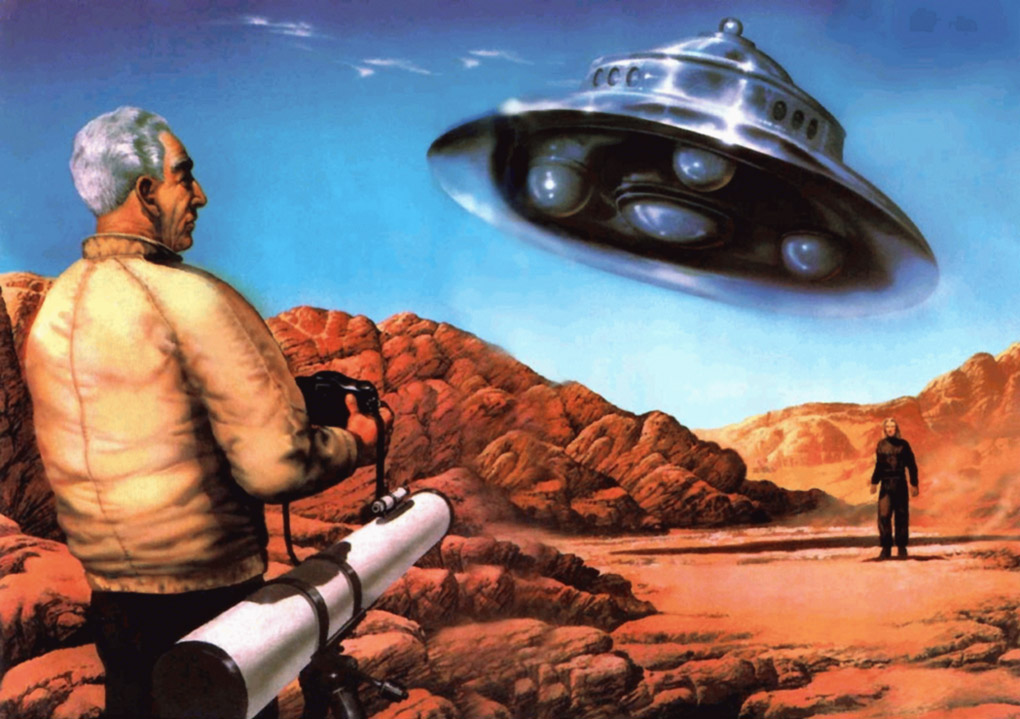
There has been a spate of UFO sightings in Darwin, in Australia’s Northern Territory. The NT is notorious for reports of flying object sightings, perhaps because the air is clear and visibility of heavenly bodies is good, but also because many people tend to spend quite a lot of time in the open in the balmy tropical nights. As the number of sightings of UFOs is high in NT, it is no surprise that a website is devoted to these sightings, which is maintained by Alan Ferguson, a UFO aficionado and photographer who has seen many UFOs and has photographed many. Some people may beg to differ…
According to Ferguson, the sightings increase during the dry season (which is starting now) and which sightings are corroborated by many other people. There were at least seven sightings of UFOs in the last week, around the Darwin area. Geoff Carr, an astronomer, said he believed 99.9% of all the UFO sightings could be explained as simple weather phenomena. The objects that people have seen and have been captured on camera have ranged from dark disks flying in broad daylight to strange lights glowing in the night sky. Many of the sightings have been explained by experts as aircraft, weather balloons, clouds, planets, stars, etc.
These latest reports from the NT are highly topical as the famous astrophysicist, Stephen Hawking warns that our earth could be at risk of an alien invasion. Hawking has suggested that extraterrestrials are almost certain to exist, as the universe has 100 billion galaxies, each containing hundreds of millions of stars. In such a big place, Earth is unlikely to be the only planet where life has evolved.
Hawking suggests that aliens might simply raid the Earth strip its resources and then move on: “We only have to look at ourselves to see how intelligent life might develop into something we wouldn’t want to meet. I imagine they might exist in massive ships, having used up all the resources from their home planet. Such advanced aliens would perhaps become nomads, looking to conquer and colonise whatever planets they can reach.” He concludes that trying to make contact with alien races is “a little too risky”. He said: “If aliens ever visit us, I think the outcome would be much as when Christopher Columbus first landed in America, which didn’t turn out very well for the Native Americans.”
The scenario is well known to us from science fiction stories, as for example “War of the Worlds” and “Independence Day”. It is a chilling thought and it is unlikely humanity would have a chance of resisting an attack by technologically advanced aliens intent on coming to earth and stripping it of its resources. However, although it makes a very good story, it is an unlikely scenario in real life. A technically advanced civilisation capable of making spaceships capable of interstellar travel, would certainly have the means to be self-sufficient and able to harvest resources from interstellar space or non-inhabited worlds.
One may also be excused in thinking that to get to that advanced stage of civilisation and technology, aliens would also be advanced socially and would not be bellicose and cruel. I am thinking that perhaps they would be superior to us in every way. I think those poor aliens, should they visit earth soon would have to fear more humans than we from them… Heaven knows we are cruel enough to each other because we have different skin colour to each other, or a different religion or have different politics! Aliens would have no chance of surviving!
April in the Antipodes is such a contrary month that sometimes grates against the Spring of my northern hemisphere psyche, and sometimes resonates deep within my adopted southern existence. April the smiling month of northern climes, weeps autumnal tears in southern latitudes. A battling duality draws my heart out into a thin string that elongates and threatens to break, only to fold in upon itself again and again, and quickly spin into a multi-ply thread. April for me personally carries with it lots of memories both unpleasant and pleasant. It encloses within it many anniversaries, both agreeable and disagreeable. Its northern-southern contrast encloses within it good and bad, smiles and frowns, pleasure and pain…
Here is poem freshly written, as the full moon graces our sky which today was at times laden with leaden clouds full of rain, and other times cleared to allow autumnal sun to shine through.
April’s Full Moon
The end of April soon to come
And Autumn ripens like a juicy plum,
While moon fills, calm and silver,
The night cold, bright quicksilver.
I loved you, lost you, now all but forgotten.
The end of April is so sweet
As memories, of foot so fleet,
That run by and disappear too quick –
Candle all burnt out with black wick.
I gave my heart, and lost it; as an apple rotten.
The end of April, once again
Entices, binds with golden chain.
The moon gazes on, dispassionate
While dark of night, once passionate
Now makes me feel the weight of my years.
The end of April covers, seals,
And ultimately time passing, heals.
From apple seed, from rotting fruit
A new tree sprouts, takes root;
My heart regenerates, and love again dries tears.
“There’s something in every atheist, itching to believe, and something in every believer, itching to doubt.” - Mignon McLaughlin
The reconciliation of religion with history is always a tough proposition. Religion relies mainly on faith, whereas history relies on facts. The older a religion is the less the facts and artifacts we can find to substantiate claims made by that religion’s holy books, its adherents and belief systems. History, which relies on facts and documentary evidence is sometimes more reliable, but unfortunately, even in history books serious errors have been promulgated (for one or another reason) as time and closer investigation often shows. It is an electrifying experience when one finds some real documentary evidence that tends to support a religious belief and it galvanises the adherents of that religion into raptures of joy, while the non-believers are somewhat shaken in their skepticism.
I read in the paper in the train this afternoon that a group of explorers said on Monday they believe they may have found Noah’s Ark. Apparently, while searching for the remains of Noah’s Ark on Mount Ararat in Eastern Turkey, a team of evangelical Chinese-Turkish explorers successfully excavated and ventured inside a large wooden structure at an elevation of more than 4,000 m above sea level.
Specimens of the wood found at the site were dated as being 4,800 years old. Officials of the Turkish government and Cultural Ministries regarded the finds positively and jointly announced the discovery with the exploration team in Hong Kong. They planned to submit an application for the wooden structure to be included on UNESCO’s World Heritage List. A mutual agreement for further co-operation was signed and the Hong Kong team members were recognised as Honorable Citizens of Agri Province, Turkey.
The decrepit wooden structure that was discovered by the team was entered through various openings, to discover seven enclosed spaces. More “rooms” are expected to be discovered. Attending experts and government officials agreed that the discovery is of great significance. In light of historical records, they believe that the most probable identity for the structure is Noah’s Ark and subsequent scientific studies should be undertaken. Mr. Gerrit Aalten, renowned Dutch Ark researcher said, “The significance of this find is that for the first time in history the discovery of Noah’s Ark is well documented and revealed to the worldwide community.”
The absence of photographs from the report is conspicuous. The types of dating tests that were done (and by whom) are not given. The composition of the expeditionary team is also rather suspicious as it is a prejudiced group that has a vested interest in the discovery. The Turkish authorities also are far from impartial as they can only benefit from publicity surrounding the supposed find: Tourism to the region will be greatly boosted by any claims that the Ark has been discovered. Furthermore, when I googled the “renowned” Mr Gerrit Aalten I found very little on him, except one site which he has obviously constructed.
Call me a skeptic, but I regard such claims with suspicion. Maybe it is my scientific training and my logic that is getting in the way of pure faith. However, let me also add that anyone who believes in a religious idea fervently needs no tangible proof to underpin that faith.
“Comedy is simply a funny way of being serious.” - Peter Ustinov
We have watched a few comedies over the last couple of weeks, which goes to show that we have had need for some serious escapism. When it came to select a film to watch, the deep serious stuff got the flick and we chose instead the light and frothy, humorous, funny or downright silly. I’ll present a few of these comedies we saw lately with a brief review and a recommendation (or not).
The first was a very formulaic vehicle for Doris Day, from those innocent days of the 1950s, which even as this film was being made were passing by so rapidly. It is the 1959 Richard Quine film “It Happened to Jane”. Doris Day plays Jane, a widow who is trying to earn a living by farming and selling lobsters. Jack Lemmon plays George, her lawyer friend (long-suffering and virtuous) who looks after Jane and her children (but no hanky-panky – it is a 1959 film and Jane is a widow and George is even a scout leader!). When one of Jane’s shipments of lobsters is ruined because of railway inefficiency, Jane decides to sue the railroad magnate who is the “meanest man in the world” (played by Ernie Kovacs). The usual trials and tribulations follow with love, justice and the American Way triumphing in the end. This was a predictable and fairly tedious movie, interesting only as a historical document. Mildly amusing in parts, irritating in others. Our rating 5/10 (IMDB rating 6.6/10).
The 2007 Scott Hicks film “No Reservations” is a remake of the 2001 German film “Mostly Martha” written and directed by Sandra Nettelbeck. We have seen both films and we still prefer the original German one, although the US version is quite good too. Catherine Zeta-Jones and Aaron Eckhart are much better looking and sexier than the more average-looking Martina Gedeck and Sergio Castellito. The production is slicker and the little niece in the US version is the cuter Abigail Breslin, rather than the more taciturn Maxime Foerste. The remake didn’t disappoint, but it was a little more shallow than the original. All actors played well and Catherine Zeta-Jones looked most demure in her chef’s outfit. Definitely worth seeing either or both of these films. “No Reservations” - Our rating 6.5/10 (IMDB rating 6.3)
“Mostly Martha” – Our rating 7.5/10 (IMDB rating 7.3).
Elvis Presley was guilty of making many movies in his career, when perhaps he should have just sung more. Most of the Presley movies were predictable, mind-rotting mash, a loose scaffold to support his singing character who was ever ready to belt out another song. We really like his songs, but his movies are really trashy. We watched the Normal Taurog 1961 “Blue Hawaii” knowing what we were in for, but the DVD was a gift and we did not look at the horse’s mouth… Elvis starred as young man back in Hawaii after being a soldier in Europe. He has to find his own way rather than be part of his father’s business. Joan Blackman plays his Hawaiian/French girlfriend while Angela Lansbury plays his scatty, socialite mother. Lots of songs are sung, of course and the scenery is quite delightful. Only for Elvis fans… Our rating 5/10 (IMDB rating 5.7).
Speaking of Elvis, how about a movie with hundreds of Elvises, 34 of them flying? The 1992 Andrew Bergman film “Honeymoon in Vegas” is a stilted comedy starring a very uncomfortable looking Nicholas Cage and an ageing James Caan, vying for the love of Sarah Jessica Parker, all in Vegas during an Elvis impersonator convention. It’s kitch and predictable and didactic and very Hollywood. Our rating 5.5/10 (IMDB rating 5.8).
And what was our favourite, Wes Anderson’s 2001 movie “The Royal Tenenbaums”. This was a comedy drama about the vicissitudes of a very strange family, the Tenenbaums. Three grown prodigies, all with a unique gift of some kind, and their mother are staying at the family household. Their father, Royal, who had left them long ago, and comes back to make things right with his family. The stellar cast includes Gene Hackman, Anjelica Huston, Ben Stiller, Bill Murray, Gwynneth Paltrow and Luke Wilson. This is quite an engaging, though odd film, where drama mixes with black humour. Our rating 7.5/10 (IMDB rating 7.6).
Enjoy your week!
“In war, there are no unwounded soldiers.” - José Narosky
Today is Anzac Day, one of the most important commemorative days in the Australian Calendar. ANZAC was the name given to the Australian and New Zealand Army Corps soldiers who landed on the Gallipoli Peninsula in Turkey early on the morning of 25 April 1915 during the First World War (1914-1918). As a result, one day in the year has involved the whole of Australia in solemn ceremonies of remembrance, gratitude and national pride for all our men and women who have fought and died in all wars. That day is today, 25 April.
Every nation must at some stage, come for the first time to a supreme test of quality; and the result of that test will hearten or dishearten those who come afterwards. For the fledgling nation of Australia that first supreme test was at Gallipoli. The Australian War Memorial in Canberra leads the nation in honouring the fallen, but every city, town and village in Australia today commemorated the significance of this day with a variety of activities that perpetuates the memory of the dead, “lest we forget”…
The Gallipoli operation cost Australia 26,111 casualties, 8,141 dead; New Zealand 7,571 casualties, 2,431 dead; Britain 120,000 casualties, 21,255 dead; France 27,000 casualties, 10,000 dead; India 1,350 dead; Newfoundland (now part of Canada) 49 dead.
The painting for this Art Sunday is Charge of the 2nd Infantry Brigade at Krithia (1927) by Charles Wheeler (1880-1977). He was born on 4 January 1880 at Dunedin, New Zealand, son of John Edward Wheeler, labourer, and his wife Victoria Julia, née Francis, both English born. After John's death, Julia moved with her family to Williamstown, Melbourne, about 1891. Apprenticed in 1895 to C. Troedel & Co. as a lithographic artist, Charles began part-time study next year at the Working Men's College; in 1898 he took drawing classes at night in the National Gallery schools under Frederic McCubbin and in 1905 joined the painting class under L. Berbard Hall. Some five years later Wheeler held his first one-man show. In 1910 the National Art Gallery of New South Wales purchased his painting, 'The Portfolio', and the National Gallery of Victoria acquired 'The Poem'. Wheeler exhibited with the Victorian Artists' Society in 1908-10 and with the Australian Art Association in the 1920s and 1930s.
In April 1912 he had travelled to London, visiting Paris and the Prado in Madrid to see the work of Velazquez. In the following year he exhibited 'Le Printemps' at the Salon de la Société des Artistes Français, Paris, and in 1914 went to the Netherlands. Returning to England before the outbreak of World War I, he enlisted in the 22nd Battalion, Royal Fusiliers. He was awarded the Distinguished Conduct Medal (1916) for his actions at Vimy Ridge, but refused a commission and remained a sergeant. Demobilized in February 1919, Wheeler took a studio at Chelsea and exhibited 'Autumn Afternoon' and 'Golden Hours' at the Royal Academy of Arts, London. Back in Melbourne, he held an exhibition at the Athenaeum Gallery in March 1920. For some years a private teacher of drawing and painting, he became assistant drawing instructor at the National Gallery in 1927 and drawing-master in 1935.
I have been blogging daily on this platform for several years now. It is surprising that I have persisted as the world is changing and "microblogging" is now the norm. I blog to amuse myself, make comment on current affairs, externalise some of my creativity, keep notes on things that interest me, learn something new and to surprise myself with things that I discover about this wonderful, and sometimes crazy, world we live in.
I sometimes get the impression that I am on a soapbox delivering a monologue, so your comments are welcome.